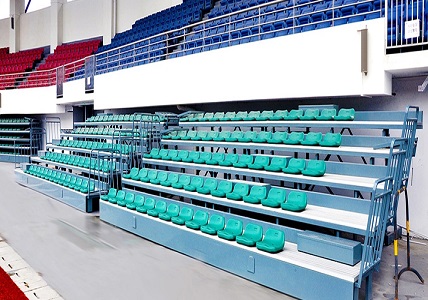
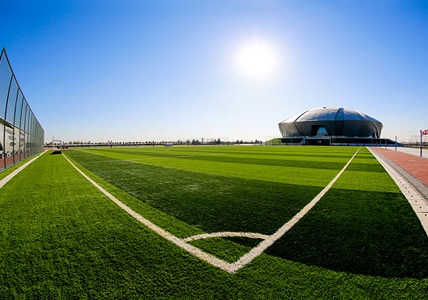
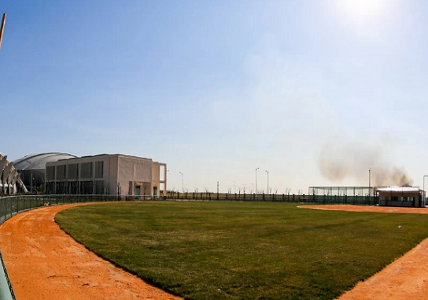
Sourcing wholesale stadium seats requires more than selecting a model from a catalog and comparing unit prices. Buyers should define the venue environment, seating quantity, mounting surface, row dimensions, accessibility requirements, and expected service life before requesting quotations. A reliable sourcing process should also verify seat materials, fixing methods, test documentation, packaging, spare parts, and production consistency before the full order enters manufacturing. This guide explains how contractors, venue operators, distributors, and project buyers can prepare a clearer stadium seating specification and reduce avoidable changes during production and installation.
A supplier can provide a more accurate recommendation when the buyer submits project information rather than only asking for a price per seat.
Start with the following details:
Venue type and country of installation
Indoor, covered outdoor or fully exposed outdoor environment
Required seating quantity
Concrete step, steel structure or aluminum grandstand
Available row depth and riser height
Preferred seat width and backrest height
Fixed, tip-up, foldable or retractable design
Color, numbering and logo requirements
Target delivery date and installation schedule
Applicable local building, fire and accessibility requirements
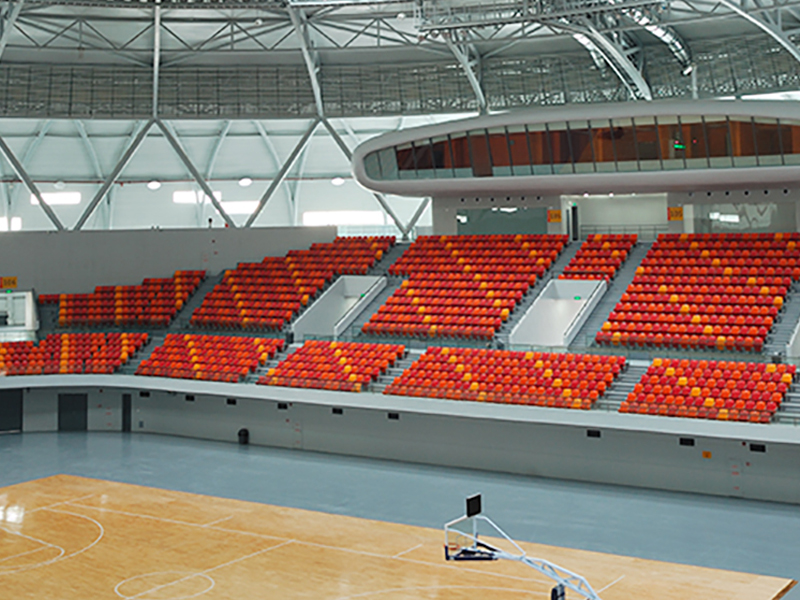
Drawings are particularly useful. A simple seating plan showing row lengths, aisle locations, step dimensions, and fixing surfaces can prevent incorrect assumptions about seat spacing or mounting brackets. Buyers should also distinguish between the number of seats required and the number of seats that can actually fit. Columns, handrails, aisle widths, wheelchair spaces, emergency routes, and uneven row lengths may reduce the usable capacity. For a broad overview of available configurations, buyers can first review ACT Group’s stadium seat solutions before narrowing the specification.
Material selection affects outdoor performance, appearance, maintenance, and transportation cost. The seat shell, support brackets, and fasteners should all be evaluated rather than considering only the visible plastic surface.
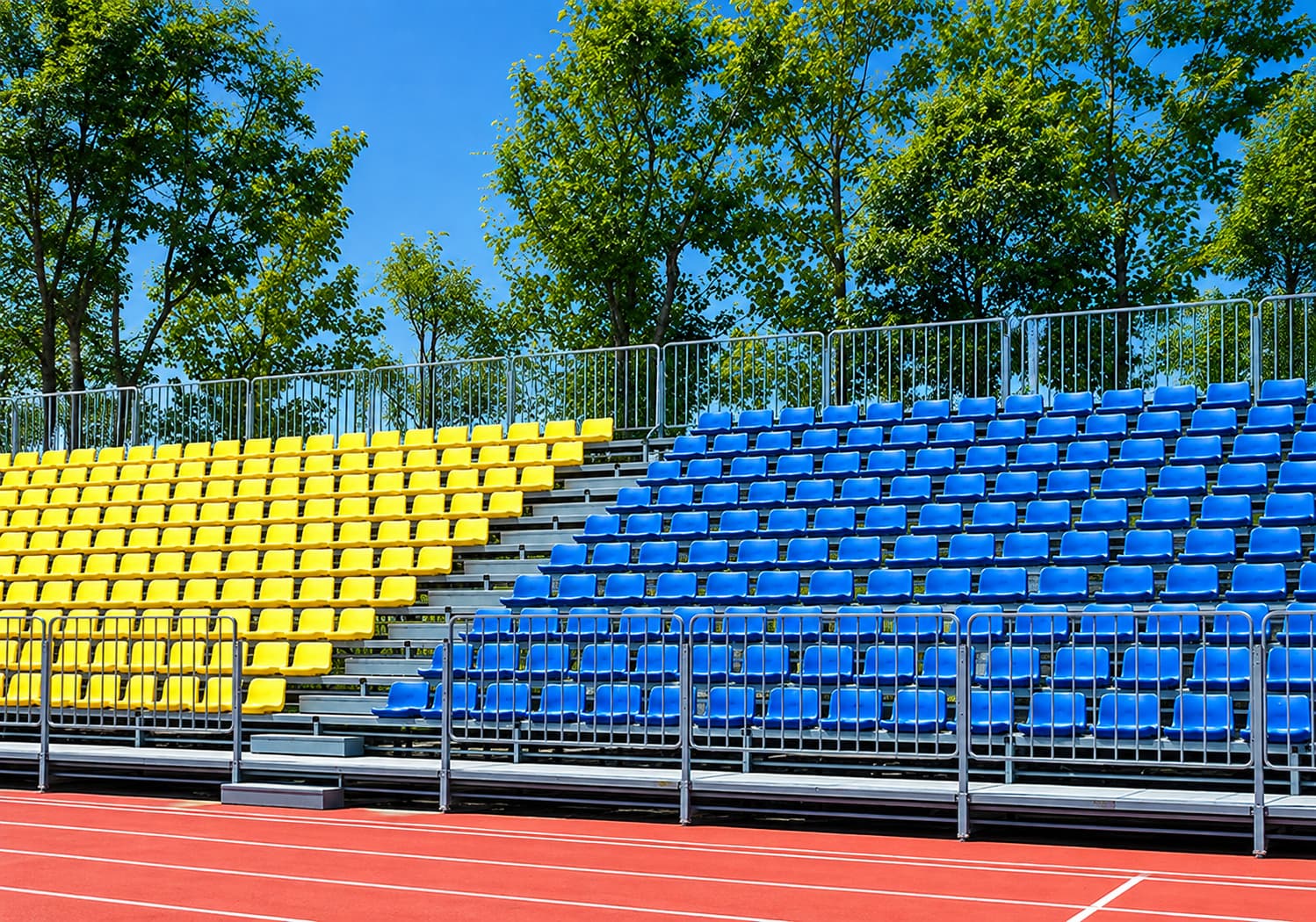
High-density polyethylene, commonly identified as HDPE, is widely used for molded outdoor spectator seating. It offers good impact resistance and can be formed into simple, middle-back or higher-back seat shells. HDPE seats may be suitable for football grounds, school stadiums, and open-air venues where rain, sunlight, and regular cleaning are expected. Buyers should confirm whether UV stabilizers are incorporated into the material and request relevant weathering information for outdoor projects.
High-density polypropylene, often described by suppliers as HDPP, can also be used for injection-molded stadium seating. It allows defined shapes, consistent dimensions, and a range of molded colors. The suitability of either HDPE or HDPP depends on the formulation, wall thickness, seat structure, and test performance—not simply the material name. ACT Group’s football stadium seat range, for example, includes HDPE and HDPP options with different seat dimensions and mounting arrangements. Mounting brackets may be manufactured from galvanized steel, powder-coated steel, stainless steel, or aluminum, depending on the seat design and venue environment.
For coastal, humid, or frequently washed venues, buyers should ask about:
Base metal grade
Coating or galvanizing method
Fastener material
Corrosion-resistance testing
Replacement availability
Isolation between dissimilar metals
For outdoor plastic seats, accelerated weathering tests can help compare resistance to UV radiation, heat, and moisture. ISO — ISO 4892-3:2024, Plastics and Fluorescent UV Lamp Exposure describes methods for exposing plastic specimens to fluorescent UV radiation, heat, and water to simulate the weathering effects experienced in actual end-use environments. A test report should be checked for the tested material, exposure time, test method, and result. A generic certificate that does not identify the offered seat model may provide limited value.
The correct mounting method depends on the seating structure, available fixing area, cleaning requirements, and space below or behind the seat.
A simple-mounted seat is fixed directly to a concrete step or supporting surface. This is often used for compact low-back or middle-back plastic seats. Advantages include fewer metal components and a relatively straightforward structure. However, the concrete surface must provide sufficient space for drilling, anchors, and seat clearance.
Floor-mounted seats use a support bracket fixed vertically to the tread or platform. This arrangement is suitable for higher-back seats and models that require additional support. Buyers should confirm the bracket footprint, anchor positions, seat height, and clearance behind the backrest. Seat spacing should be coordinated with the row layout before holes are drilled.
Wall-mounted seats are fixed to the vertical face of a concrete riser or structural support. Keeping the floor area clearer can make cleaning easier, particularly in indoor sports halls. The riser must have sufficient strength and depth for the specified anchors. Bracket dimensions should be reviewed against the actual structure rather than assumed from a standard drawing.
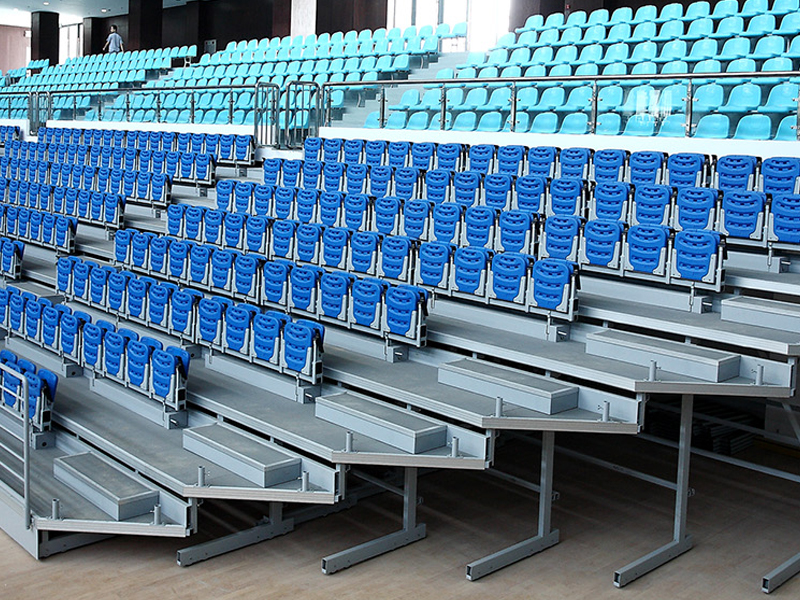
Multi-purpose halls may need seating that can be extended for events and stored when the floor is required for sports, exhibitions, or training. In these cases, an integrated retractable seating system may be more appropriate than separately mounted chairs. The mounting specification should never be finalized from seat photos alone. BSI — BS EN 13200-4:2023, Spectator Facilities: Seats and Product Characteristics covers relevant product characteristics for fixed spectator seating, including considerations for fixing seats to the supporting structure. Final anchor selection and structural verification should be completed by the project engineer or qualified installer according to the actual substrate and local requirements.
A practical supplier checklist should evaluate whether the offered product can be manufactured, delivered, and installed consistently across the full project.
Confirm the model number, material, dimensions, seat type, mounting method, color reference, UV requirements, bracket finish, and fastener specification.
For large orders, request a production-representative sample. Check the seat dimensions, surface finish, color, drainage, bracket fit, edge quality, and installation method. The approved sample should become the reference for mass production.
Request product drawings, bracket dimensions, anchor locations, recommended seat spacing, and installation instructions. Drawings should indicate which dimensions are fixed and which can be customized.
Ask which tests apply to the offered model. Depending on the project, documentation may cover load performance, impact resistance, UV exposure, flammability, corrosion resistance, or material composition.
For wholesale stadium seats supplied in several batches, clarify how the factory manages color consistency, raw-material control, and model identification. Replacement seats supplied later should remain compatible with the original brackets and fixing positions.
Confirm how seats, brackets, and fasteners will be packed and labeled. Numbered packaging by section or row can simplify site distribution. Buyers should also confirm pallet dimensions, container loading, shipping marks, and protection against scratching.
Include an agreed quantity of spare seats, brackets, caps, and fasteners. Spare components are useful for future maintenance, especially when the project uses custom colors or model-specific hardware. ACT Group offers different fixed stadium seating options for permanent venue projects and specialized football stadium seats for outdoor spectator areas.
| Project Condition | Suggested Seat Type | Common Material | Mounting Option | Key Procurement Check |
|---|---|---|---|---|
| Outdoor football stadium | Fixed middle-back seat | UV-stabilized HDPE or HDPP | Direct or floor mount | UV performance, drainage, and corrosion protection |
| Indoor gymnasium | Fixed or foldable seat | HDPE or HDPP | Wall or floor mount | Cleaning clearance and row dimensions |
| School sports field | Low-back fixed seat | Molded plastic | Direct mount | Simple installation and replacement availability |
| Multi-purpose arena | Tip-up or retractable seating | Plastic seat with metal structure | Floor-mounted or telescopic system | Operating space and structural coordination |
| VIP spectator area | Higher-back seat with armrests | Molded plastic or upholstered components | Floor mount | Comfort, seat spacing and finish consistency |
| Concrete grandstand renovation | Replacement fixed seat | Material matched to exposure | Existing or redesigned fixing points | Anchor compatibility and substrate condition |
The table is a starting point rather than a substitute for project drawings. The final seat and bracket should be selected after the supplier reviews the venue structure and installation conditions. Accessibility must also be addressed during layout planning. For projects in the United States, the U.S. Access Board — ADA Standards for Assembly Areas covers wheelchair-space dimensions, companion seating, accessible routes, and lines of sight. Requirements vary by country, so the responsible project team should identify the applicable local rules before finalizing seat quantities.
Provide the venue type, installation country, indoor or outdoor environment, required quantity, row dimensions, mounting surface, preferred seat style, color requirements, and delivery schedule. Drawings and site photos can improve quotation accuracy.
Both materials can be suitable when the formulation and seat structure meet the project requirements. Compare the complete product specification, UV resistance, impact performance, wall thickness, and test documentation rather than choosing by material name alone.
Many molded stadium seats can be produced in project colors and supplied with seat numbers or row identification. Custom colors should be approved using a physical color sample because screen colors may not accurately represent the finished plastic.
Yes. A production-representative sample allows the buyer to check dimensions, surface quality, color, mounting brackets, and installation compatibility before the complete order is manufactured.
The appropriate quantity depends on project size, expected use, and whether the model or color is customized. Buyers should normally include spare seat shells, brackets, caps, and fasteners in the original procurement plan.
Confirm the mounting drawings, substrate condition, anchor specification, bracket orientation, and seat spacing before production. A trial installation using the approved sample can reveal structural or dimensional issues before installation begins across the venue.
Sourcing wholesale stadium seats is most reliable when the order is treated as a coordinated venue package rather than a simple chair purchase. Clear drawings, verified materials, approved samples, suitable mounting hardware, and organized packaging help contractors and venue operators control installation time and long-term maintenance. ACT Group can support buyers with stadium seating selection, project specifications, and bulk supply planning based on different venue conditions.
BSI — BS EN 13200-4:2023, Spectator Facilities: Seats and Product Characteristics
ISO — ISO 4892-3:2024, Plastics and Fluorescent UV Lamp Exposure